
Fine Isn't a Status: A Simple Way to Check In With Yourself and Your Friends
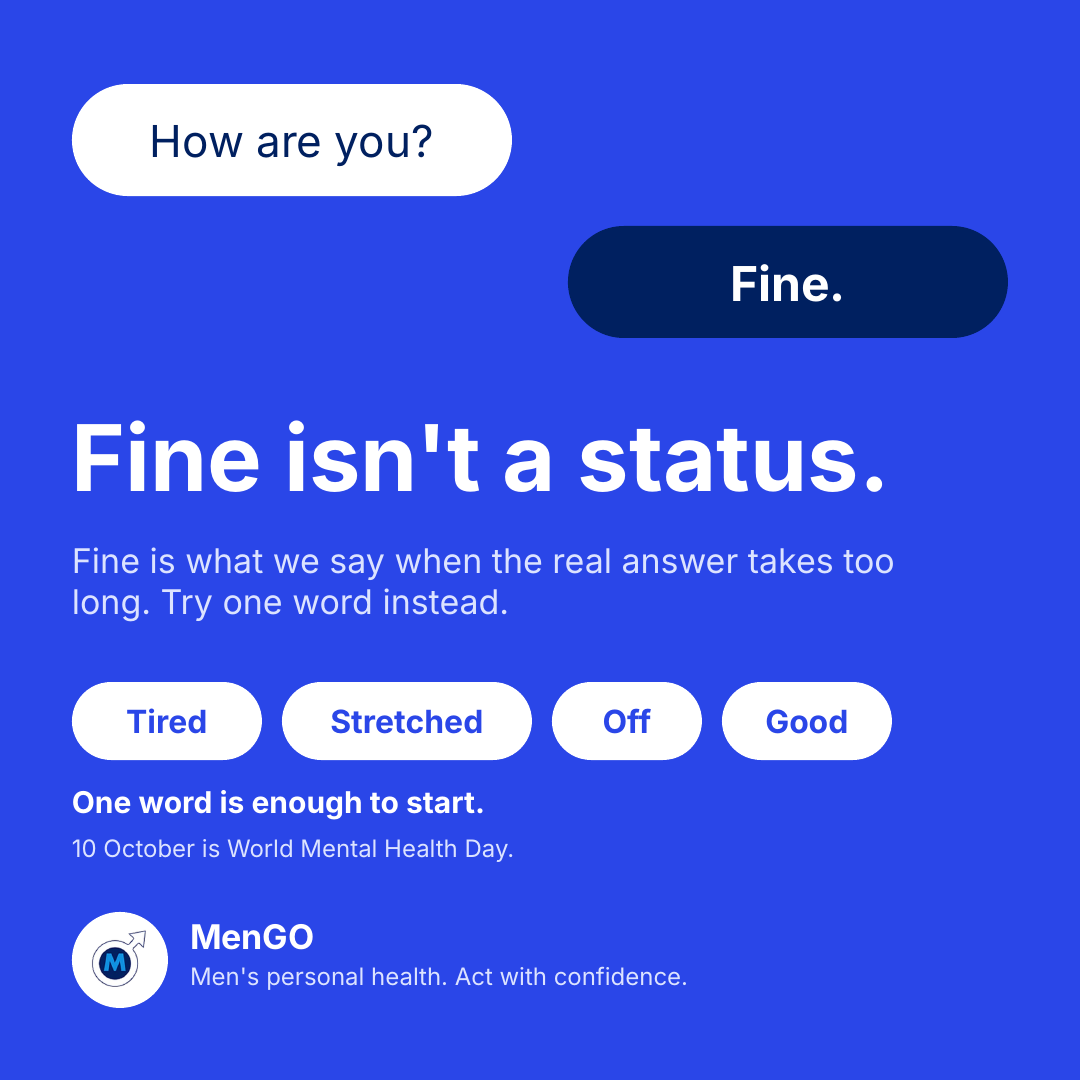
"How are you?" "Fine."
It may be the most common exchange between friends, colleagues and family. It is also one of the least informative. "Fine" is what we say when the real answer would take too long, or feels too hard to start.
Why "fine" is easy and why it is not enough
Saying fine is quick and keeps things light. For many men, it is also a habit built over years: do not make a fuss, do not be the one who complains, deal with it later. The trouble is that "later" has a way of never arriving, and small things that go unsaid can pile up.
Try one word instead
You do not need a long speech. You do not need to have the answer worked out. Try one word:
- Tired.
- Stretched.
- Off.
- Good.
Good is allowed, too. The point is not to find something wrong. It is to be accurate. One honest word is enough to start a real conversation, and it gives the other person something to respond to.
How to check in with a friend
- Ask the question as if you want the answer. Put the phone down for a minute.
- If he says fine, try a follow-up: "Fine, or fine-fine?"
- Be ready to listen without fixing. Often, what helps most is that someone asked.
- Follow up later. A short message a few days on shows you meant it.
How to check in with yourself
Pick a regular moment, such as the end of the workday or the start of the weekend, and ask yourself the same question you would ask a friend. Answer in one word, and notice whether the same word keeps coming up. If it does, that is worth paying attention to.
World Mental Health Day
10 October is World Mental Health Day, a good reminder to ask the question and to answer it honestly. If things feel heavy, or you are worried about a friend, talk to someone you trust or a qualified professional. You do not have to wait until it is "bad enough."
About MenGO
MenGO is a private, science-based companion for men's personal health, with reliable information and access to qualified specialists. Men's personal health. Act with confidence.
MenGO provides health information and is not a substitute for professional medical advice.